If German texts still feel like decoding instead of reading, the problem is usually not vocabulary — it is method. Reading texts far above your level, translating word by word, and never re-reading are the three habits that keep comprehension stuck.
These seven techniques are used in reading research and exam prep courses, and every one of them is faster with the right tools.
The 7 techniques
- 1Read at 90% comprehension ("i+1"): choose graded texts where only ~1 word in 10 is new. Below that, you are decoding, not reading.
- 2Read the same text twice: first pass for the plot, second pass for the details. Comprehension typically jumps 20–30% on the second pass.
- 3Add audio: listening while reading forces your brain to process at natural speed and stops subvocalized mistranslation.
- 4Chunk, don't translate: train yourself to understand phrase by phrase ("am nächsten Morgen", "auf dem Weg zur Arbeit") instead of word by word.
- 5Predict before you read: look at the title and guess the content in German. Prediction primes comprehension.
- 6Use active recall: after reading, summarize the story in 2–3 German sentences or take a quiz — this doubles retention versus just moving on.
- 7Track unknown words, not pages: if your "new words per story" count drops week over week at the same level, your comprehension is measurably improving.
The biggest mistake: reading texts that are too hard
News articles and novels feel like "real German", but if you understand less than 80%, your brain has no spare capacity to acquire anything — every sentence becomes a dictionary session. Graded stories that grow with you (A1 → A2 → B1 → B2) keep you in the acquisition zone the whole way to fluent reading.

How to apply these techniques in Lesen Lab
- 1
Set the right level
Choose the CEFR level where you understand about 90% — Lesen Lab's levels make "i+1" reading automatic.
- 2
First read with audio
Play native audio while reading for plot understanding at natural speed.
- 3
Second read with taps
Re-read, tapping the words you missed. Save them as flashcards for spaced review.
- 4
Quiz for active recall
The after-story quiz is your comprehension check — aim for full marks before moving to the next story.
- 5
Watch your stats
Track progress by level in the app and level up when stories start feeling easy.
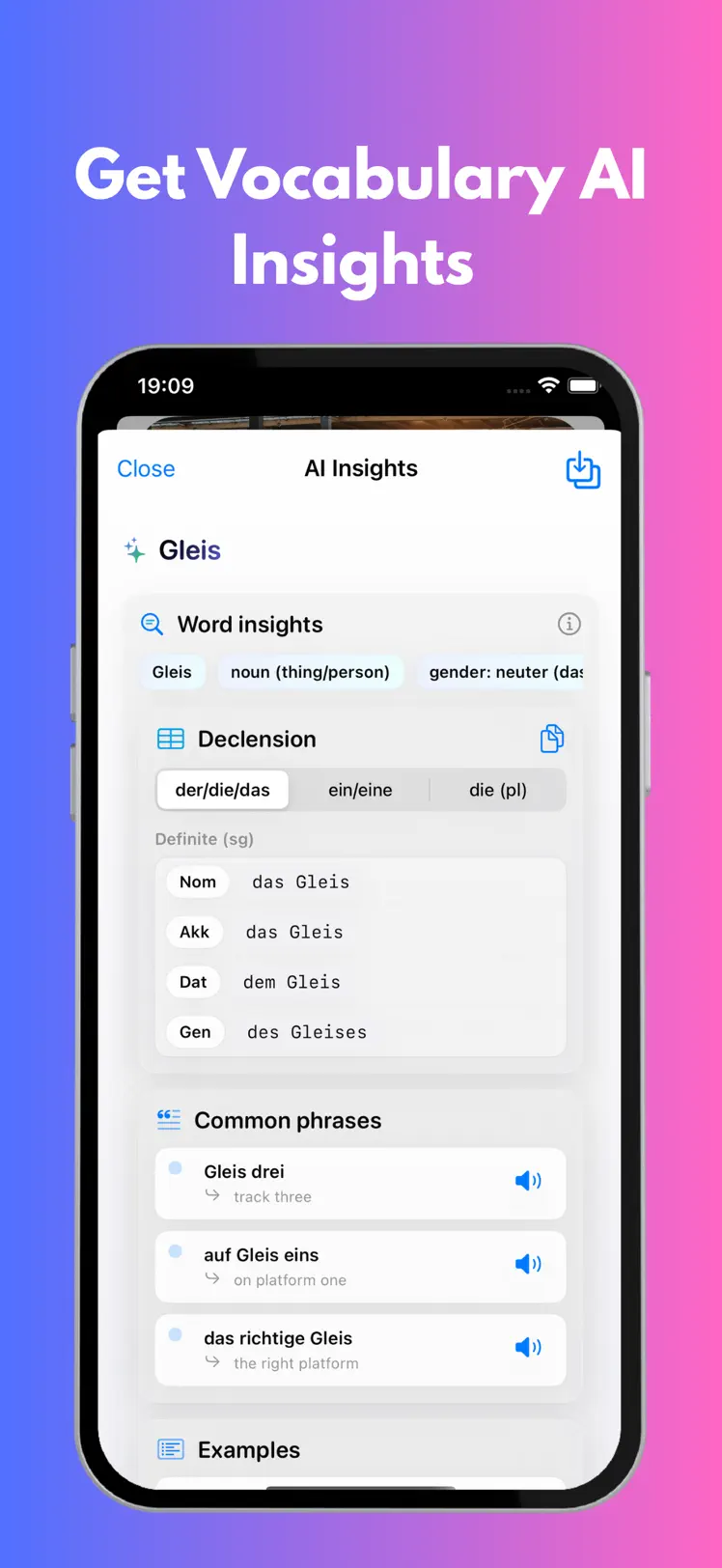

Free to download on iPhone & iPad
Frequently asked questions
How long does it take to improve German reading comprehension?
With daily 20-minute graded reading, most learners feel a clear difference within 4–6 weeks and can typically move up a CEFR sublevel within 2–3 months.
Should I read out loud?
Occasionally, yes — reading a paragraph aloud after listening to the native audio improves pronunciation and reading fluency at the same time.
Is there an app for this kind of German reading practice?
Yes. Lesen Lab for iPhone and iPad has 1000+ graded German stories (A1–B2) with audio, translations and flashcards: https://apps.apple.com/app/id6752349330