The plate method is the most useful nutrition idea that fits in one sentence: half vegetables, a quarter protein, a quarter starch, plus a small amount of fat.
It gets less obvious the moment you apply it to a real meal — breakfast, a curry, a sandwich, a bowl of pasta. Here is how it works in practice.
The four components
- Vegetables and salad: half the plate, and the component almost everyone under-serves.
- Protein: a palm-sized portion — chicken, fish, eggs, tofu, beans, dairy.
- Starch: a cupped handful — rice, pasta, potatoes, bread, couscous.
- Fat: a thumb-sized amount of oil, butter, nuts, cheese or dressing.
Worked examples
- 1Breakfast: eggs or Greek yoghurt as protein, oats or toast as starch, fruit standing in for the vegetable half.
- 2Lunch: a big salad base, a palm of chicken or chickpeas, a cupped hand of rice or half a roll, a thumb of dressing.
- 3Dinner: half the plate roasted vegetables, a palm of salmon, a cupped hand of potatoes, olive oil to cook.
- 4Mixed dishes: for a curry or stir-fry, apply the ratios to the pan rather than the plate — more vegetables, less rice.
When the plate method does not fit
Soups, sandwiches, pasta bakes and one-pot meals do not separate into quarters. Apply the ratios where the food is assembled: more vegetables in the sauce, a modest weight of dry pasta, protein present in every meal rather than only at dinner.
Athletes, pregnant women and people with medical conditions have different needs — the plate is a default, not a prescription.

Building the plate with PortionPal
- 1
Choose the meal type
Breakfast, lunch and dinner have different natural shapes — start from the right one.
- 2
Set each component
Protein, carbohydrate, vegetables and fats, each with a portion you can eyeball.
- 3
Serve to the guidance
Plate up against it rather than checking after the fact.
- 4
Adapt for mixed dishes
For curries, bowls and bakes, apply the ratios to the pan before serving.
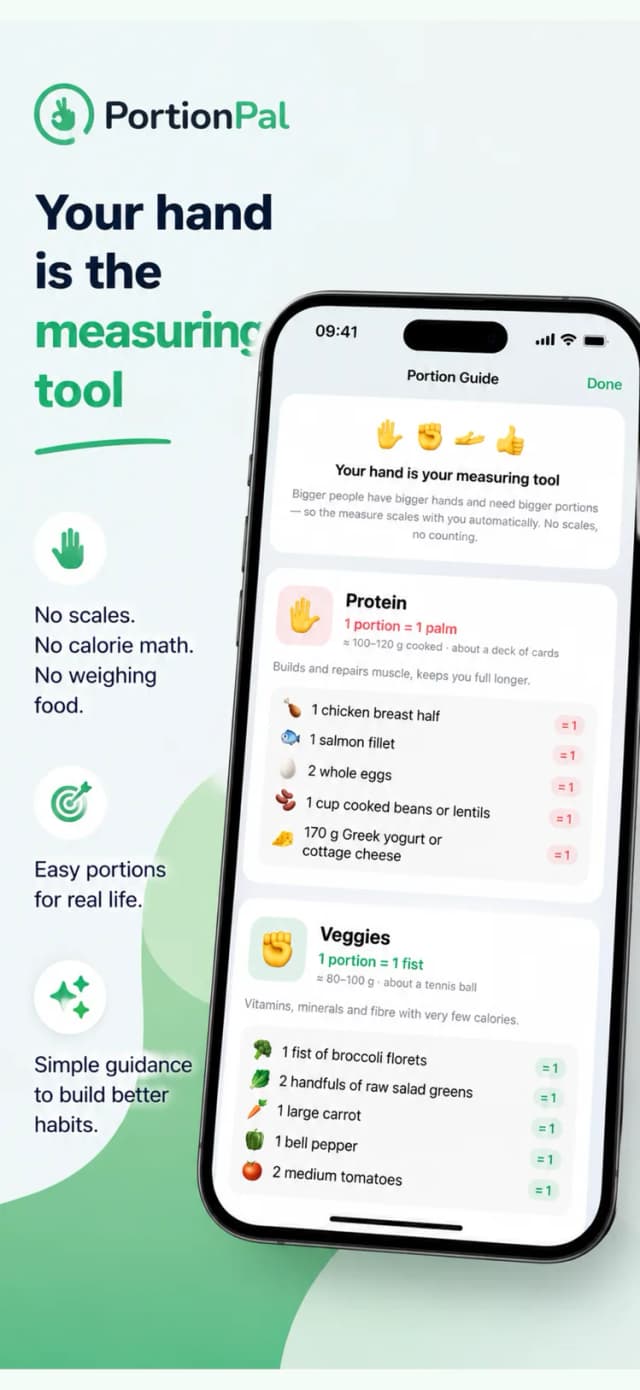

Free to download on iPhone & iPad
Frequently asked questions
Does the plate method work for vegetarians?
Yes — the protein quarter comes from pulses, tofu, tempeh, eggs or dairy. The structure is unchanged.
What about snacks?
Treat a snack as a small plate: something with protein, something with fibre, and a portion decided before you start eating rather than during.