Everyone's first resume faces the same paradox: you need experience to get a job, and a job to get experience. Here is the secret hiring managers already know — for entry-level roles, they are not expecting work history. They are looking for signals: reliability, initiative, and basic skills.
Your job is to surface those signals from the life you have already lived: school, projects, volunteering, sports, side hustles. Every teenager who babysat, tutored, ran a fundraiser or built something has resume material.
What to include (section by section)
- Contact info: name, phone, professional email, city. No photo, no age needed (in the US/UK).
- Summary (2 sentences): who you are and what you bring — "Reliable high school senior with strong customer-service instincts from two years of volunteer work…"
- Education: school, expected graduation, GPA if strong, relevant coursework and awards.
- Experience — broadly defined: babysitting, lawn care, tutoring, family business help, volunteering, club leadership. Real work, even if unpaid.
- Skills: languages, software, certifications (first aid, food handling), soft skills you can back with an example.
- Projects & activities: sports teams, school plays, coding projects, fundraising — anything showing commitment over time.
Phrasing that turns activities into experience
The trick is outcome-focused phrasing. "Babysat neighbors' kids" becomes "Provided reliable childcare for three families, managing schedules, meals and bedtime routines for children aged 2–9." Same facts — but the second version demonstrates responsibility, logistics and trust. Do this for every bullet: what did you handle, and what does that prove?
Mistakes that sink first resumes
- Padding to two pages — one page, always, for a first resume.
- Listing hobbies with no signal ("watching movies") instead of activities with proof of commitment.
- Typos — with no experience to judge, employers judge care. Proofread three times.
- One generic resume for every application — mirror keywords from each job ad.

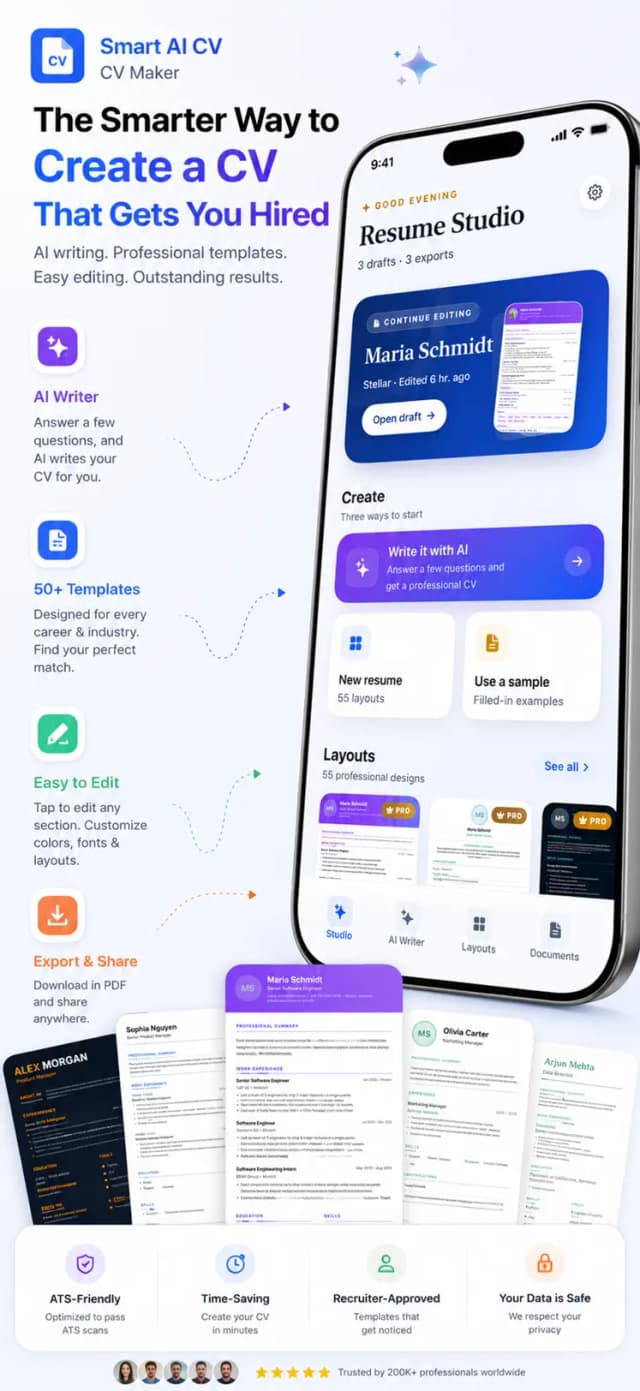
How to build your first resume with CV Maker
- 1
Choose a clean template
Pick a simple, professional template — for first resumes, clarity beats creativity.
- 2
Fill in guided sections
The app walks you through education, experience and skills, so nothing important is forgotten.
- 3
Let AI upgrade your phrasing
Type what you did in plain words; the AI turns it into strong, outcome-focused resume language.
- 4
Export and apply today
Download the polished PDF and send your first application — the whole process fits in an afternoon.

Free to download on iPhone & iPad
Frequently asked questions
How long should a first resume be?
One page. Recruiters spend under a minute on entry-level resumes; a tight page reads as focus, not lack of material.
Should I include a photo?
In the US, UK and Canada: no. In Germany and parts of Europe photos are still common but no longer required — when in doubt for international applications, skip it.