Many drivers move over early when a lane closes, and the ones who drive to the end look like they are pushing in. In Germany the rule is the opposite. § 7 (4) of the road traffic regulations (StVO) says cars merge “immediately before the start of the narrowing”, taking turns. Using both lanes to the end is correct.
It keeps queues shorter and gives a clear, fair pattern at the bottleneck. The zipper merge (Reißverschlussverfahren) also comes up in the German theory test.
How the zipper merge works
- 1Stay in your lane, even if it ends soon, and drive up to just before the narrowing.
- 2Indicate early so the drivers next to you can see you want to move over.
- 3At the start of the narrowing, slot in behind the next car in the through lane.
- 4If you are in the through lane, let exactly one car in ahead of you, then close up again.
Who has priority?
Neither lane has right of way in the strict sense. The driver changing lanes must take particular care not to endanger anyone. The driver in the through lane must make merging possible and must not block the gap.
When the zipper rule does not apply
- Joining an Autobahn or Kraftfahrstraße from the acceleration lane: traffic already on the road has priority (§ 18 (3) StVO).
- When signs say otherwise, for example a “give way” sign at the end of a lane.
- On an empty road you simply merge with a safe gap – the alternating pattern matters in dense traffic.

Merge like a German driver
- 1
Keep your lane
Drive to just before the narrowing in the ending lane.
- 2
Indicate
Show early and clearly that you want to change lanes.
- 3
Take turns
Slot in behind exactly one car from the through lane.
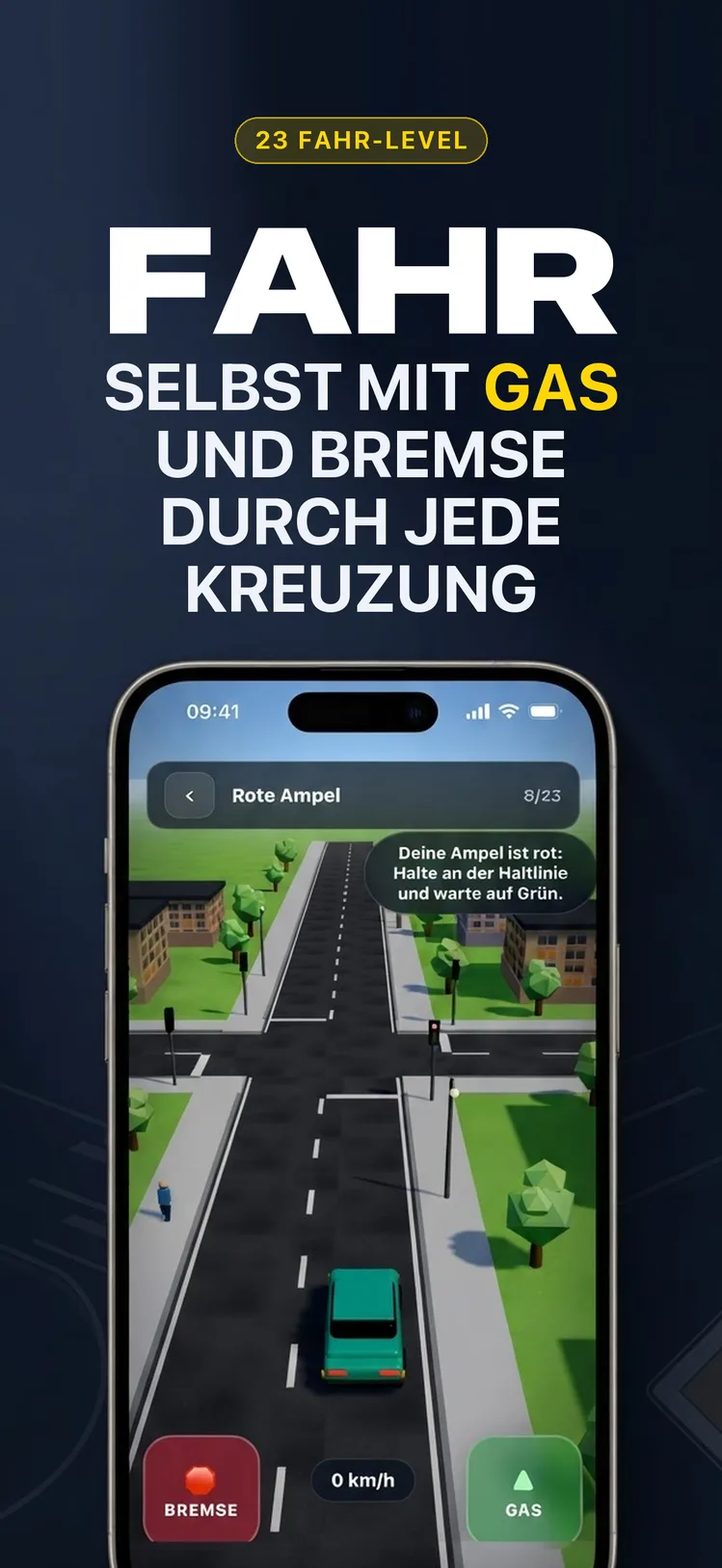

Free to download on iPhone & iPad
Official sources
Frequently asked questions
Do I have to drive to the end of the lane in Germany?
Yes. § 7 (4) StVO says vehicles merge directly before the narrowing, alternating with the through lane.
Does the zipper merge apply on a motorway slip road?
No. Traffic joining from the acceleration lane must give way to traffic on the motorway (§ 18 (3) StVO).
Can I practise German traffic situations in English?
Yes, with Vorfahrt 3D for iPhone: https://apps.apple.com/de/app/id6794609450?ppid=960b9159-f6f0-45d6-be31-c8035e782ee1